“The important thing is not to stop questioning. Curiosity has its own reason for existing.”
-Albert Einstein
About 60 years ago, one of the most useful, and almost necessary, tool of the modern world was born. Though is was not a single creation, or the invention of a single person, the Internet was created through decades of research, hundreds of scientist, and years of trial and error.
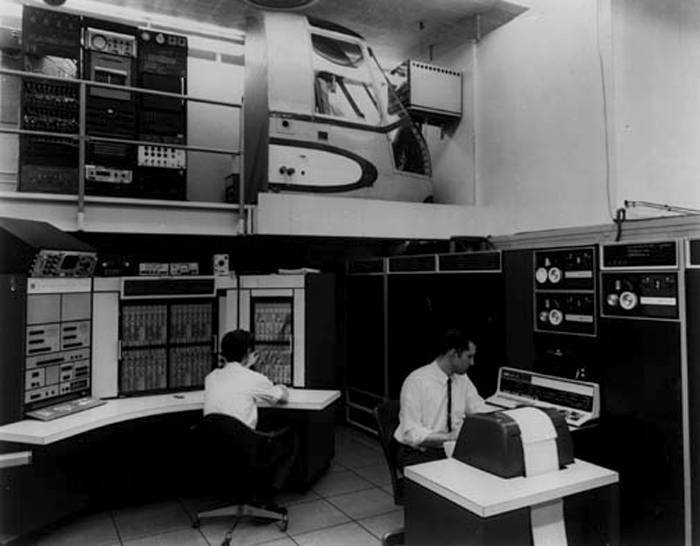
The fundamental idea of The Internet, was first traced back to ARPANET, the Advanced Research Projects Agency Network. Funded by the Department of Defense, ARPANET was created to allow multiple computers communicate on a single network. The project’s goals was to be able to send messages from US military messages to other military receivers during the Cold War. However, in its first attempt to send a message from a computer in UCLA to a computer in Stanford, which said “L-O-G-I-N,” the system crashed, and the full message could not be transmitted. Stanford only got “L-O.”
Later, in the 1970’s, two scientist, Robert Kahn and Vinton Cerf, worked to develop the Transmission Control Protocol and Internet Protocol (TCP/IP). This set the standard for how data could be transmitted between multiple networks. TCP/IP made sure that messages being sent from one computer to another would arrive and be seen in the correct order it was sent. From here, the modern internet began to expand.
In the year 1990, The Internet became more accessible through the invention of the World Wide Web, by Tim Berners-Lee, a scientist at CERN. The Internet was no longer just a way to send files from one place to another, but was a web of information that anyone could access from The Internet. A year later, the first Web server, at the Stanford Linear Accelerator Lab, came online.
In 1992, students and researchers at the University of Illinois developed the first user-friendly browser called “Mosaic,” which allowed words, picture, clickable links, and scrollbars all on the same page for the first time. That same year, the Web became available for commercial use, as declared by Congress. By the year 1994, there were around 500 servers, and 2 million computers connected online, with only By the end of the year, there were 10,000 servers and 10 million users.
Today, we can’t even imagine what life would be like with out the Internet. The Web has expanded to smartphones, TV, laptops, cars, and even refrigerators. We can now communicate with other people that are thousands of miles away, buy almost anything, learn almost anything, and create almost anything via the internet. We have created an virtual world, that is growing and expanding everyday more and more.
Sources:
https://www.history.com/news/who-invented-the-internet
https://www.history.com/topics/inventions/invention-of-the-internet
https://home.cern/science/computing/birth-web/short-history-web
 Ada's Blog